The Unmutual Reviews: The Hard Way (DVD) Review and Location Report and images by and (c) Carol Brady
‘Less is more.’
A Tribute to The Hard Way and to Patrick McGoohan.
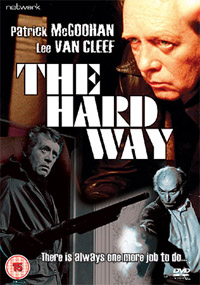
Since happening upon this film a few years ago – when I managed to win it at auction for just a few pounds - I have become so obsessed with it that I have made pilgrimages all over Ireland in order to pay homage to it, and to its leading actor, Patrick McGoohan. He is, sadly, no longer with us, along with many of the other fine actors who make up the supporting cast (Lee Van Cleef; Donal McCann; Peter Brayham; Joe Lynch). The re-release of the film on DVD, almost 30 years to the day of its original screening, is long overdue – but better late than never! It may have taken a very long time but the best things in life are always worth waiting for.
In writing this review, I have struggled long and hard to articulate my feelings into words. I hope that I do justice both to the film and to Patrick McGoohan. I believe that this appearance is arguably his finest, most understated and underrated acting role ever.
The plot ambles along; it is heavy and slow; there is hardly any dialogue, and very little action. Anyone looking for a fast moving ‘gangster’ movie peppered with gunfire (as the trailer included in the DVD’s special features seems to suggest) will certainly be disappointed.
The use of speech is so sparse it is almost conspicuous by its absence. Most of the scenes are eerily quiet. However, this only serves to build up the tension. The use of body language to convey mood and meaning is very subtly done; especially in the bar room ‘stand off’ between the two main protagonists. The way in which John Connor (Patrick McGoohan) gently menaces his ‘handler’ McNeal (Lee Van Cleef), and resists the latter’s attempts at persuasion with a quiet, stubborn resolve, is just breathtaking to watch. I can only applaud when the former leaves with quiet dignity, then slams the bar room door behind him to signify, and release, his clearly pent-up anger. That beats any ‘shoot out’ I’ve ever seen!
In my opinion, Patrick McGoohan’s portrayal of the Irish mercenary who wants to retire is extremely sympathetic. He shows a man who is not just a cold-blooded killer. John Connor is very human, and has many redeeming qualities, including that of moral courage – borne out in the parting words of Kathleen (Edna O’Brien), John Connor’s estranged wife, in the final scene – “A waste of a man.” I have to admit that, in spite of his past deeds, I have to weep for the man – I can’t help it. Such is the power of the actor’s presence and the skill with which he takes on the mantle of this complex character.
In this respect, great credit must also be given to the skillful direction of Michael Dryhurst. Having heard that the actor and the director were very like-minded, I can well believe it when I watch the results.
In addition, the stunning cinematography of Henri Decae enhances the production. Sweeping panoramic shots of the Irish countryside and the mountains contrast sharply with the claustrophobic and depressing settings of seedy hotels and dark, dingy city streets. The way the scenes are lit is also very creative and effective.
The accompanying soundtrack consists of just three pieces, all of them instrumental, and each is cleverly employed to illustrate the mood of their respective scenes. ‘The Dear Irish Boy’, an Irish air beautifully rendered by the solo violinist Tommy Potts, and ‘Events in Dense Fog,’ (from Brian Eno’s ‘Music for Films’) which accompany John Connor’s sad, reflective moments, and the forlorn speeches from his estranged wife, tug at the heartstrings and bring tears to the eyes. ‘Patrolling Wire Borders,’ also from Music for Films (not ‘A Measured Room’, as is stated on the film credits), is spine-tingling, stark and sinister and is well suited to the more grimly cynical scenes of violence and turmoil in the twilight world of the jaded hit man.
Very little is explained to us. There is so much we don’t know; for instance, how did a man like John Connor become a mercenary? Why are his children in apparent exile in the States? And why did Kathleen, his estranged wife, then remain behind in Ireland?
But somehow, this isn’t all that important to know; in fact, it can only add to the appeal of the film. Not being spoon fed such details somehow piques the appetite – and that’s partly why I chose not to reveal too much about the plot in this review.
To cut a long story short; less is definitely more in this case. Please take the time to watch this film; be patient; and make sure you read between the lines.
LOCATIONS REPORT
A PILGRIMAGE TO "JOHN CONNOR COUNTY"
As a huge fan of Patrick McGoohan and of his little known and underrated film
‘The Hard Way’ I could feel nothing but delight when my wonderful
husband Steve told me that he had arranged for us to stay on the very same
estate that many scenes of the film were made – namely, the lovely and
secluded Luggala Estate in Roundwood, County Wicklow in Ireland!
I could go on for ever about this wonderful trip but suffice to say that it
was completely magical and I was so glad to have made it there. The estate,
a place of great beauty, is owned by the Rt Hon Dr Gareth Browne of the Guinness
family, and it was wonderful to experience the peace and quiet there as well
as to be able to go and see the cottage at last and be surrounded by such
a fantastic landscape.
I am also deeply grateful to Steve, my very generous hubby, who not only booked
the holiday for us but also did all of the driving while we were in Ireland!
So, many thanks are due to him for making it all possible.
I would like to share some discoveries I made about the film locations while
I was there. I will try to keep it brief!
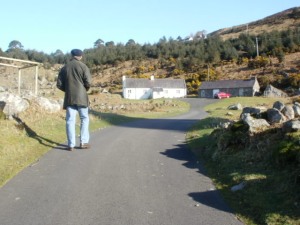
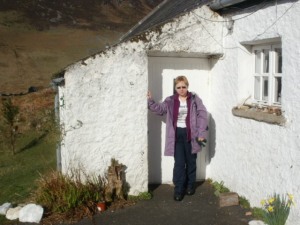
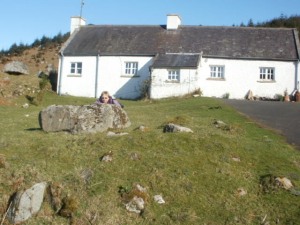
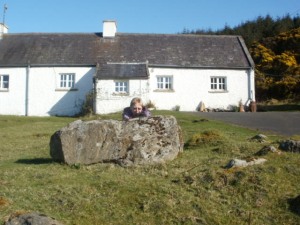
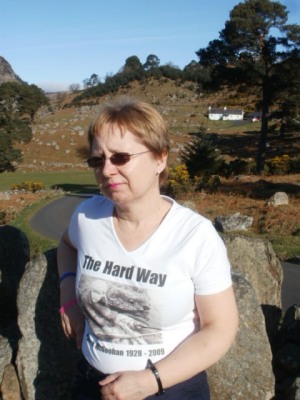
Frances, the estate manager, told me that John Connor’s white cottage
is known as ‘Trapper’. It is surrounded by the mountains and very
well hidden – seemingly perfect for someone who doesn’t want to
be found! (Mickey’s Kitchen, the cottage we hired, can be seen up above
it, on the far left, on one of the photos.) ‘Trapper’ is currently
unoccupied and in the process of being decorated as the previous occupants
had left just a few weeks before we arrived at Luggala.
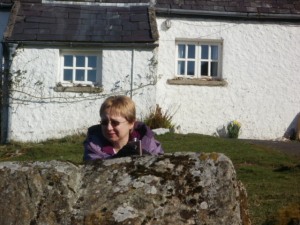
The photos we took show that the cottage has changed very little in appearance
after 30 years although the ‘crazy paving’ by the front door has
subsequently been replaced by tarmac, and the house also has a satellite dish
and oil fired central heating. However, it is still fundamentally a lovely
traditional Irish cottage, much like the one we stayed in.
My heartfelt
thanks go to Vibeke Delahunt from the County Wicklow Film Commission, who
originally provided the photo of the cottage to confirm its location, and
to the Wicklow Tourist Information office who put me in touch with her. It
is still used for filming – I spotted it in the opening scene of the
George Gently episode ‘Burning Man’ which was shown in 2008. (As
you can imagine, I got very excited!)
On my birthday we took a trip to Dublin and decided to get there by parking
the car at the seaside town of Bray and taking the Dart link service from
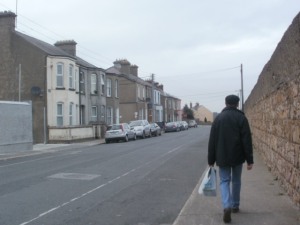
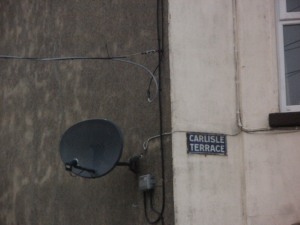
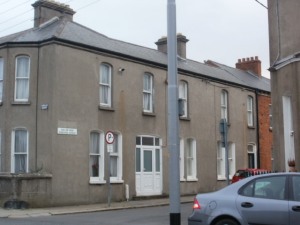
there to the city. Meanwhile, being a real ‘THW anorak’ I noticed
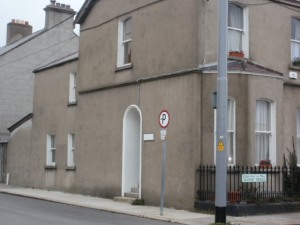
a striking similarity between a house on the corner of a road in Bray (Carlisle
Terrace) and the house where John Connor’s wife Kathleen (Edna O’Brien)
lived – and where the chase from there to the railway yard with Ryan
and Casey had taken place. I took lots of photos and then when I got home
played the film and rewound and freeze-framed the relevant scenes until I
could see that the two places were identical. So that scene, which I had assumed
to be shot in Dublin or Dun Laoghaire, was actually filmed in Bray. This actually
made perfect sense as film was made at the Ardmore Studios (formerly the National
Film Studios of Ireland) which also just happens to be in Bray!
Once we were in Dublin – which was buzzing with the preparations for
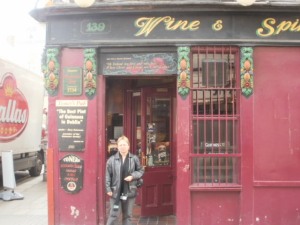
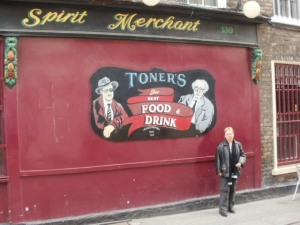
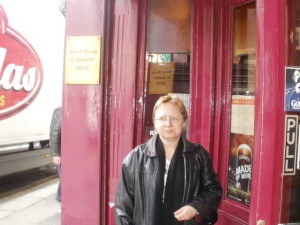
the St Patrick’s Day celebrations - we headed straight for Toner’s
pub in Baggot Street. THW enthusiasts should recall that this was where John
Connor had a rendezvous with ‘Devane’ (Joe Lynch) to set up the
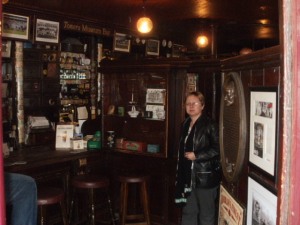
fatal last ‘showdown’ with McNeil. It was evident once we were
inside the pub that the interior scenes must have been shot there as well
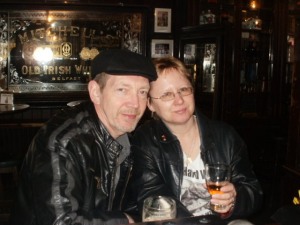
as the outdoor ones. I couldn’t resist but order a ‘large Powers
please’ especially as this was the line Devane used to order his unfortunate
friend’s drink. (Luckily, I also love Powers and you can only get it
in Ireland!) Steve then told Tom, the barman, that a film had been made there
– to which Tom coolly replied, “Yes, I have some pictures of the
film on the wall here.” In my excitement, I spun round, knocking the
glass of whiskey flying, only to find that he was actually referring to a
Sergio Leone film called ‘Duck You Suckers’! He had never heard
of THW! Hence a good whiskey was wasted all for nothing. However, Tom was
completely unphased and calmly wiped down the bar and replenished my glass.
I promised to send him some stills from THW in case he wanted to add these
to the gallery!
A visit to The Duke on Duke Street for lunch completed the pilgrimage, as
this was where Patrick McGoohan had been interviewed by Roger Goodman in between
shooting scenes for THW. I had to toast the man with another Powers, of course,
especially as his birthday was so imminent– it was only good manners!
Countryside scenes – set in Galway but filmed in County Wicklow.
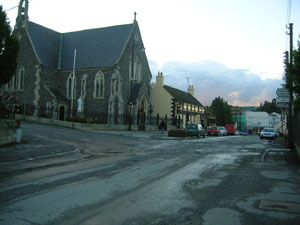
‘John Connor’s village’ is Newtownmountkennedy in County Wicklow. This took ages to find, but was eventually spotted in a photo on the website ‘WicklowToday.com’. My husband and I stayed there in July 2007, and, of course, visited the bar frequently! The bar’s name has since changed from Haslam’s (or ‘Ma Haslam’s’, as our barman at the hotel called it) to the Mountkennedy Inn. We stayed at the Parkview Hotel, which had not long been built. A very nice, smart hotel but it looked very out of place in the little village! Building work was also in progress on a new department store next door to the hotel!
The trees that were in the church foreground when filming took place have since been felled, but the rather forlorn statue of the Virgin Mary still remains.
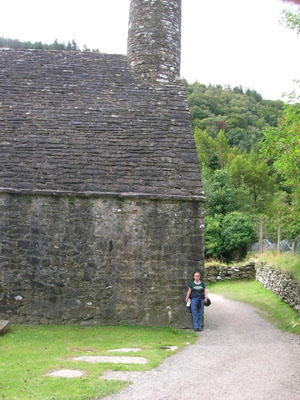
The chapel and churchyard in the closing scene is St Kevin’s Kitchen at Glendalough in County Wicklow. This is around 15 minutes drive from Newtownmountkennedy. The site is very beautiful, and is a huge tourist attraction. ‘St Kevin’s Kitchen’ is named after a hermit saint who lived there many centuries ago – ironically, but rather aptly, the poor hermit was visited by crowds of pilgrims when all he had wanted was peace and quiet.
Galway and the Connor name.
Whilst on
holiday in Galway, I checked out the address that is written on the postcard
from John Connor’s
daughters. Although the film was not shot in Galway, the address does exist
–‘Woodstock’ is the name of a small area within Moycullen,
which is itself a tiny village with one small bar. The name Connor (along
with O’Connor) is also a very common name in Galway. This might explain
why they used the name.
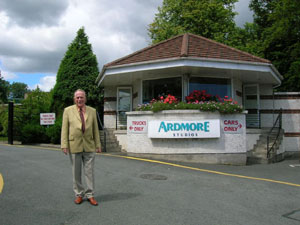
Michael McNeive was manning the gatehouse at Ardmore Studios when we turned up unannounced on a hot Sunday afternoon. He was lovely, and took lots of time out to chat to us and share his stories both of Patrick, who he remembered very well, and other great and well known personalities he'd met. A very interesting character and a real gentleman!
To order "The Hard Way" on DVD click HERE.
An excellent wikipedia page for the film, written by Toby Howard, can be found HERE.